AUC Home page
Back to AUC Home

Onsi Sawiris School of Business Hosts the First Edition of the MENA Family Business Research Conference

Family Business Conference group photo
November 10, 2025

In a region where family enterprises shape economies, legacies, and livelihoods, the MENA Family Business Research Conference 2025 convened thought leaders, scholars, and industry pioneers to reimagine the future of family business—not as a private inheritance, but as a public force for impact.

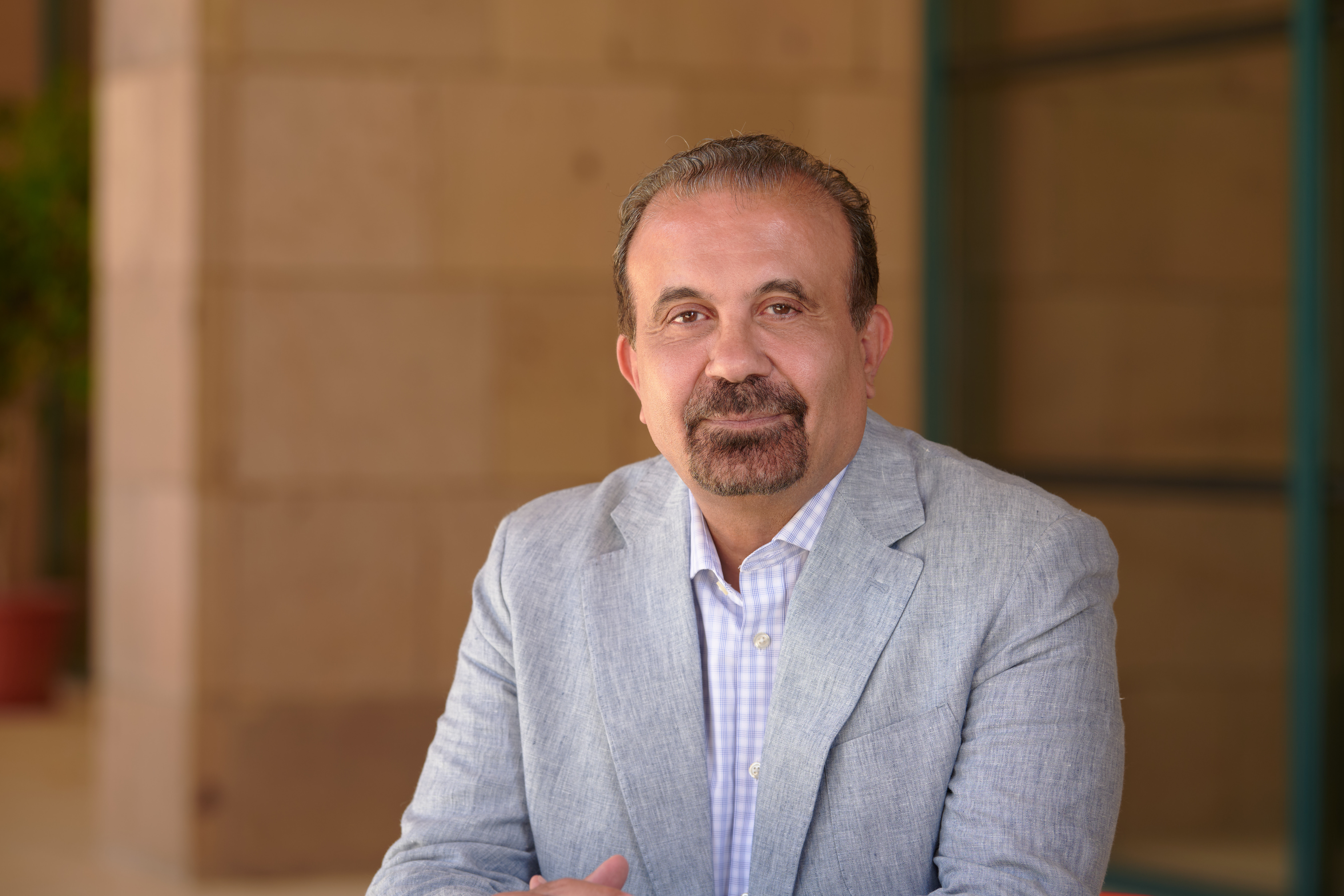
Opening remarks by Randa El Bedawy, conference academic lead and associate professor of management, Hala Barakat, director of CEI, and Sherif Kamel, dean of Onsi Sawiris School of Business, framed the gathering as more than an academic convening; it was a regional conversation about resilience, purpose, and the social responsibility of legacy.

Legacy as a Living System

Throughout the conference, one idea resonated above all: family businesses are not just economic engines; they are living systems built on values, trust, and continuity.

In a panel exploring how family enterprises act as change agents across Africa, business leaders Emad El Sewedy, Fatma Ghali, and Mohamed Abou Ghaly illustrated how purpose-driven leadership translates legacy into long-term impact.

“Sharing our knowledge and experience is one of the most precious assets we can offer,” noted El Sewedy, describing how developing human capital has become one of his company’s most enduring contributions—from employee training to launching a software development school that graduates youth ready to innovate and lead.

For Abou Ghaly, family values form the invisible infrastructure of success: “We have a weekly lunch between the grandfather and grandchildren—a moment to pass down culture, humility, and our sense of community. This is our real family legacy.”

Meanwhile, Fatma Ghali reflected on building ecosystems rather than empires: “We founded the Azza Fahmy Foundation and Azza Fahmy Design School to preserve craftsmanship, nurture creativity, and fill market gaps. It is all about building the right ecosystem for your business.”

Their reflections revealed that in today’s MENA context, legacy is not about preservation alone—it’s about adaptation; continuously reinterpreting values across generations while staying anchored in purpose.

Governance, Law, and the Architecture of Continuity

A recurring theme across sessions was governance—not as a bureaucratic formality, but as the architecture of continuity. With family businesses generating over 70–80% of Egypt’s national income, the absence of a clear legal framework has left many vulnerable to conflict, succession failure, and fragmentation.

In discussions hosted by the Egyptian Junior Business Association (EJB), business leaders and policymakers underscored the need for a family business law to safeguard these enterprises across generations.

“Without governance and structured succession, continuity is at risk,” stated Marian Kaldas, Executive Director, Egyptian Center for Arbitration and Settlement of Non-Banking Financial Disputes, who called for legal clarity on ownership transfer, dispute resolution, and inclusion.

Saad Sabrah of IFC emphasized that “Governance is front and center; it’s about balancing emotional family ties with economic realities.”

For Myriam Beshay, Board Member and Supply Chain Director, General Trading Co. Ltd., preparation and meritocracy remain critical: “Before joining my family business, I spent a decade in corporate life. The next generation must earn its place, not inherit it by default.”

The message was clear: regulation should not restrain the entrepreneurial spirit, but rather empower families to institutionalize their legacy, ensuring that passion evolves into permanence.

Bridging Generations: Dialogue, Debate, and Shared Vision

The Moderated Intergenerational Debate, led by Ahmed Abdel-Meguid, professor of accounting at the Onsi Sawiris School of Business, brought together Alexandra Abdel Nour (COO, Happy Tex), Randa Fahmy (Founder, Randa Fahmy Design Associates), and Ahmed El Naggar (CEO, Daltex Corp.) for an honest conversation between first- and second-generation leaders.

With candid reflections and personal stories, the panel explored how values, leadership styles, and innovation evolve across generations. Discussions centered on balancing heritage with innovation, fostering open communication, and ensuring that values, passion, and purpose remain the guiding compass through change.

Speakers also highlighted women’s empowerment as a transformative force in modern family enterprises and emphasized that leadership transition is not merely a handover, but a collaboration that redefines identity and strategy. The result was a vibrant dialogue on resilience, adaptability, and the intergenerational transfer of vision and passion.

Insights from PwC: The Global Family Business Landscape

Nabil Diab, partner at PwC Egypt and visiting professor at Onsi Sawiris School of Business, shared key findings from PwC’s Global Family Business Survey, offering regional and global perspectives on the evolving landscape of family enterprises.

He noted that family businesses contribute a significant share to global GDP and employment, forming the backbone of economies worldwide. Yet, global economic headwinds and rapid technological disruptions are reshaping priorities—shifting the focus from aggressive expansion to stabilizing operations and safeguarding resilience.

Diab emphasized that in times of disruption, purpose and values are becoming the defining factors of long-term success, guiding family firms toward transformation rooted in identity.

Succession and the Human Side of Strategy

At the heart of family business sustainability lies succession—a topic redefined in the powerful workshop led by Stephen Shortt, CEO of CareerFit and Talent Select, under the striking title “Build a Killer Family Business, Without Killing Your Family.”

Shortt reframed succession as both strategy and psychology, offering his “Five Ps” model: Purpose, Pick, Prepare, Promote, and Patience. Each step, he reflected, transforms transition into growth rather than conflict.

His session was complemented by a moderated discussion featuring Mohamed Aref, COO of Ahram Security Group, and Maya Roger, Chairman and CEO of Swegypt Mina International for Engineered Steel Solutions. Together, they explored how family businesses can balance legacy and innovation while sustaining growth and preserving core values.

Speakers agreed that emotional legacy must be balanced with business pragmatism—and that strong governance, communication, and shared values are essential for navigating generational transitions. They also emphasized the role of family constitutions and succession plans in preventing conflict and ensuring continuity.

Family Enterprises and Africa’s Economic Future

In a session titled “Family Enterprises as Catalysts for AfCFTA Integration,” Nevine Nakhla, CEO of ElGondy Trading (The AfCFTA Trading Company Egypt), highlighted the untapped potential of family enterprises in strengthening intra-African economic collaboration.

Nakhla encouraged businesses to view Africa as a unified market of opportunities and to align their strategies with AfCFTA policies for sustainable scaling. She underscored the importance of engaging with institutional mechanisms such as PAPSS and national AfCFTA committees to enhance competitiveness and integration across borders.

Her message was clear: family enterprises are not just local legacies—they are regional catalysts capable of shaping the future of the African economy.

The Next Generation: Redefining Legacy

Among the most powerful moments were the NextGen dialogues, where young family business leaders and renowned consultants shared their hopes and challenges. They spoke candidly about modernizing tradition, promoting inclusion, and integrating sustainability into core strategies.

From Omar ElAraby’s reflections on family values to Ashraf Sheta’s insights on mentorship, these sessions revealed a generation that views legacy not as a weight to carry, but as a platform to build upon. Their message captured the spirit of the conference: the future of family enterprise will be collaborative, inclusive, and purpose-driven—anchored in values, yet agile enough to evolve.

From Research to Regional Movement

The second day also featured a keynote address by Cheick-Oumar Sylla, division director, North Africa and Horn of Africa at IFC, who underscored the vital role of family businesses in regional development and reaffirmed the IFC’s commitment to supporting private sector growth across Africa and the Middle East.

The conference also celebrated its academic foundation, with researchers from across the MENA region presenting findings on topics ranging from daughters’ succession challenges to governance cultures in Lebanon and Morocco. An editors’ roundtable with Natalia Vershinina and Seyed Alireza Athari empowered scholars to publish research that bridges rigor with regional relevance.

As Barakat and El Bedawy closed the conference, they reflected on how far the journey had come—from a single Family Business Research Day into a regional movement driving both knowledge and policy.

From legacy to impact, Onsi Sawiris School of Business continues to champion conversations that transform research into action, empowering family enterprises to shape a sustainable, inclusive future for the MENA region.

Organized by the Center for Entrepreneurship and Innovation (CEI) at Onsi Sawiris School of Business under the theme “Family Businesses at Crossroads: From Legacy to Impact,” the conference embodied the School’s mission to bridge research and practice, advancing dialogue between generations, industries, and ideas.

Share