07
Feb
Apply To AUC! Learn About AUC's Programs & Scholarships
Register Now! Learn more about AUC's academic Programs, facilities, and Scholarship opportunities.
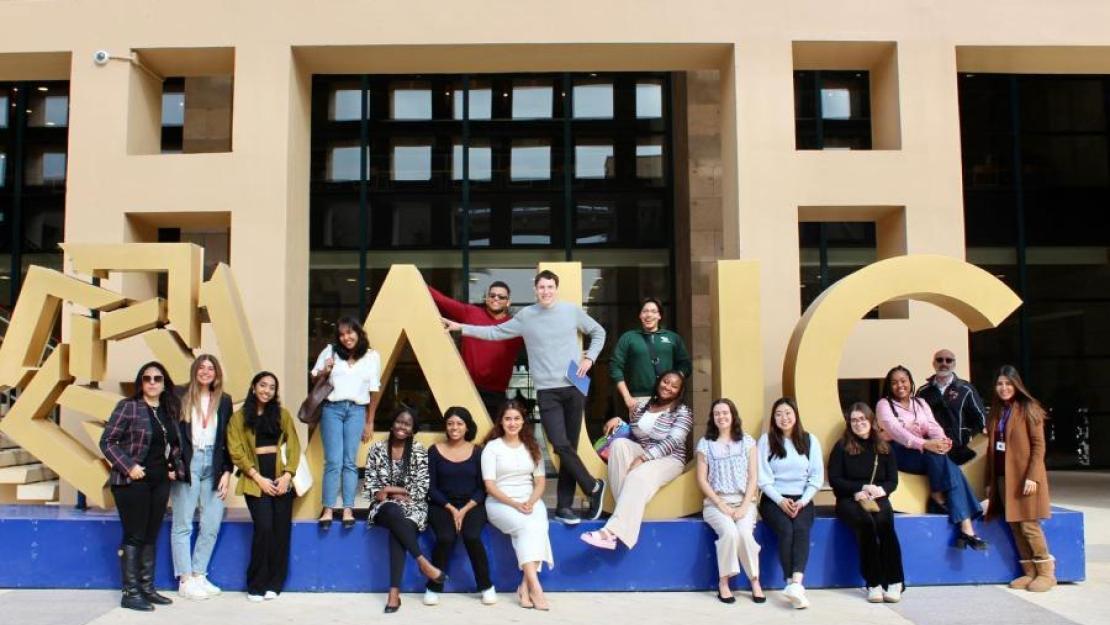
The American University in Cairo's (AUC) School of Business recently hosted a group of undergraduate students from Princeton University's School of Public and International Affairs (SIPA) on campus for an undergraduate study tour.
The trip was part of a cultural exchange between AUC and Princeton, focusing on Egypt and Africa, tailored specifically to SPIA students. Students attended educational sessions on topics related to labor markets, developing human capital and innovation practices with a focus on the region's entrepreneurship ecosystem. They also met with public officials from the Central Bank of Egypt and the Egyptian Micro, Small and Medium Enterprises Development Agency (MSMEDA) to discuss issues related to financial inclusion and women's access to finance, in addition to direct talks with young entrepreneurs and NGO leaders.
Field trips to the Egyptian Museum, the Citadel, the National Museum of Egyptian Civilization, Islamic and Coptic Cairo, Moez Street and Khan El-Khalili, and the Giza Pyramids were part of the program as well.
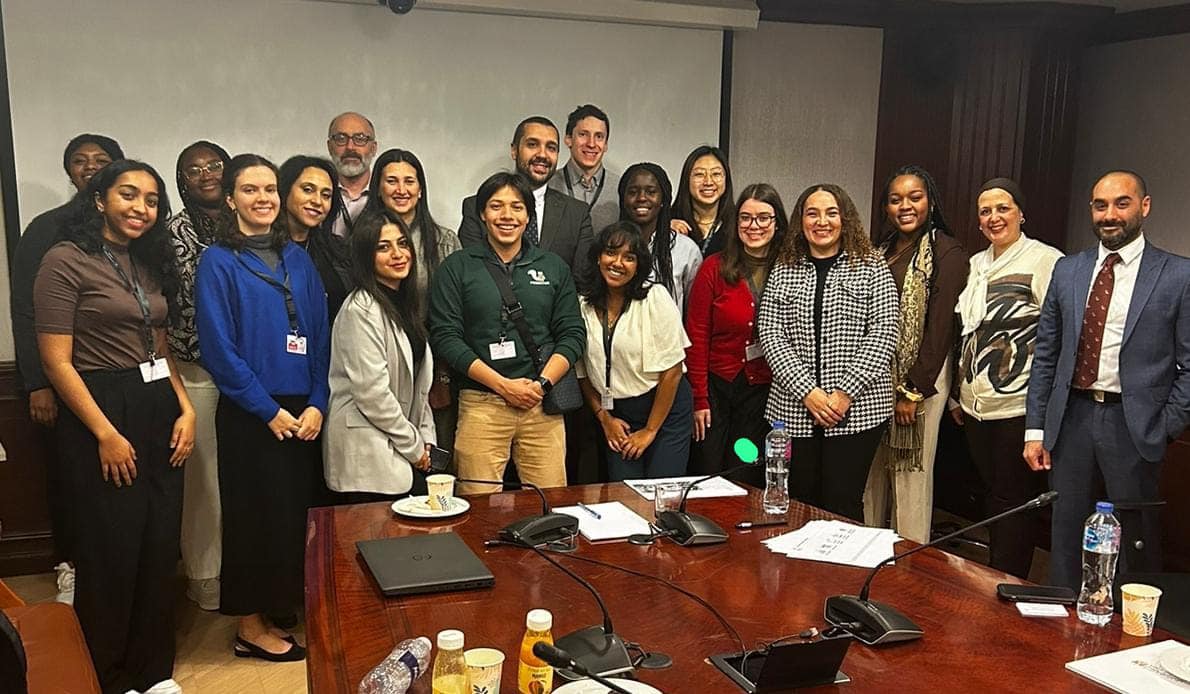 | 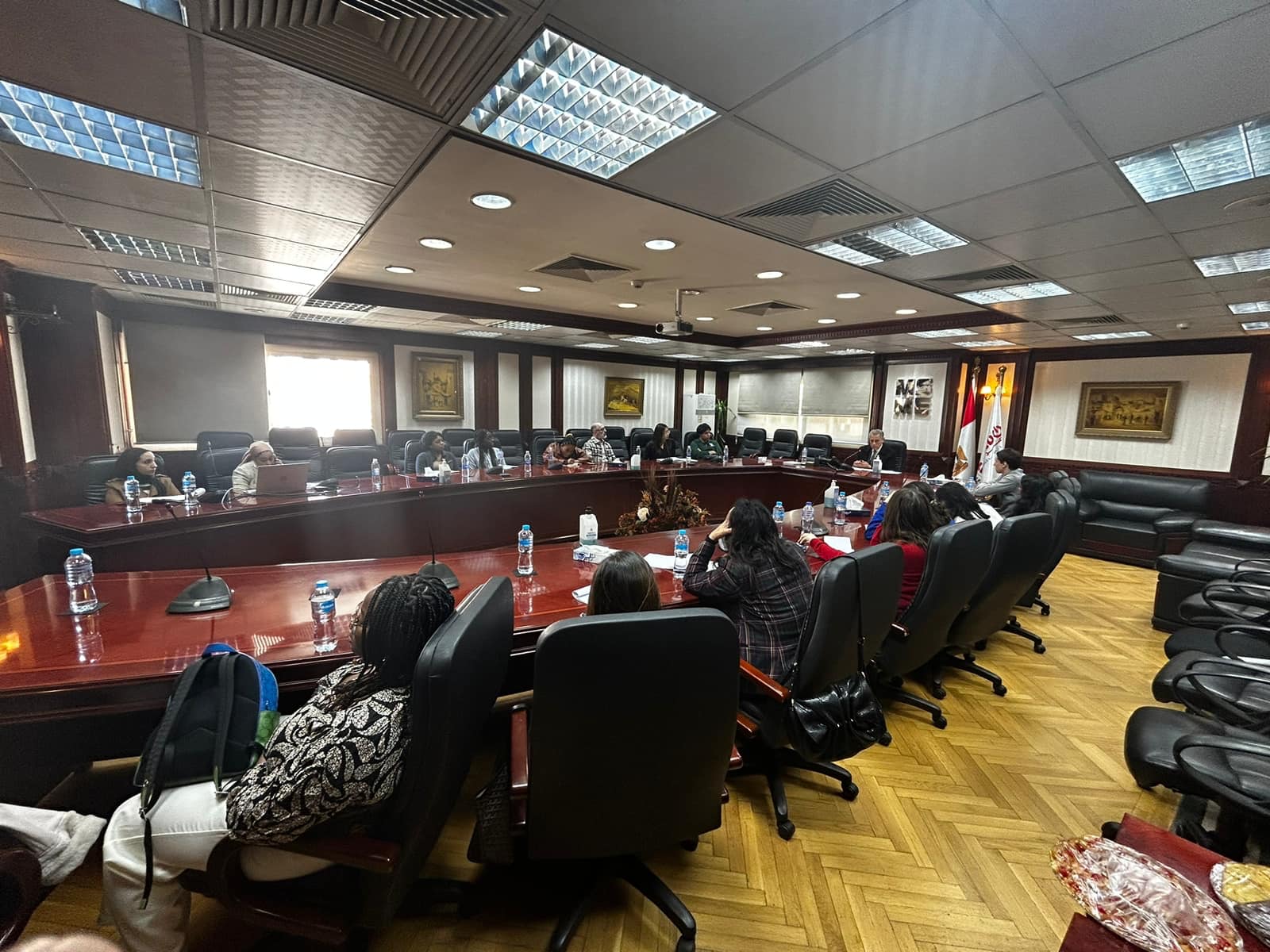 |
On the first day, students attended lectures on labor markets and human capital as well as challenges in the region featuring Sherwat Elwan Ibrahim, associate professor of operations management, and Dina Abdel Fattah, assistant professor and chair of the Department of Economics.
Next, they visited the Central Bank of Egypt and attended a talk by top executives in the financial inclusion sector on financial inclusion policies and the bank's initiatives to promote them. The students with Khaled Bassiouny, general manager of the bank's financial inclusion department, Sally Abdel Kader, general manager of the financial literacy department, Hani El-Banhawy head of SMEs banks strategies, and Mohamed Fayez, head of entrepreneurship and non-financial services.
Finally, the students attended a talk by Deputy Executive Director and Head of Planning and International Cooperation of MSMEDA Tarek Shash, who discussed the agency's ongoing efforts in financing and establishing a supportive environment for small and micro enterprises, spreading the culture of entrepreneurship, and implementing community development programs and labor-intensive public projects that contribute to employability, poverty alleviation, and improved living standards.
The visit is part of the school's internationalization efforts, which aim to place the school as the top destination for business education in the Middle East and Africa.

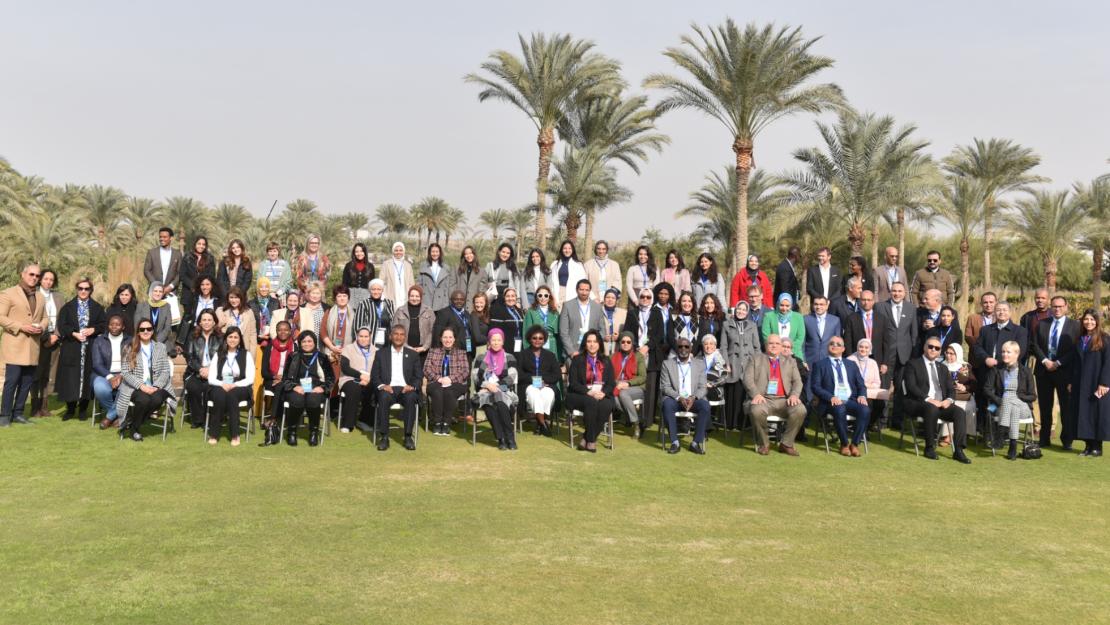
After spearheading its launch during the School of Business Business Forum in 2022, the school hosted the first Annual General Meeting of the United Nations Principles for Responsible Management Education (UNPRME) Chapter Africa at the AUC New Cairo campus on January 11.
The hybrid meeting provided a forum to discuss the strategic direction of the chapter and was followed by a session discussing the Implications of COP27 on Responsible Management Education in Africa.
“This meeting and what PRME represents reflect what AUC School of Business is all about. Also, all those attending the first annual meeting reflect their support and endorsement to the importance of responsible business,” said Dean Sherif Kamel. “Across Africa, our beloved continent, of course we have our differences but also we have our similarities and I believe that the PRME Chapter Africa is a platform where we can work together and learn from each other,” he added.
The Principles of Responsible Management Education (PRME) is an initiative of the United Nations Global Compact. This global intergovernmental organization calls on the private sector to take action and contribute to social and environmental needs as expressed in the United Nations Sustainable Development Goals (SDGs).
Complementary to and in support of this call to business, the focus of PRME is to build awareness of sustainability and the SDGs at business schools and universities around the world by integrating the SDGs into the teaching, research and practices of these institutions.
“PRME is a wonderful example of a United Nations initiative that actually shows the strong force from the global community,” highlighted Mette Morsing, head of PRME Secretariat.
The aim is to ensure that current and future business leaders have the knowledge and capabilities they need to make decisions that balance economic priorities with social and environmental imperatives to deliver positive change and create a better world for all.
“Business education is the most popular field in the world, we have a huge responsibility regarding how we teach young future leaders,” expressed Morsing.
PRME Chapter Africa aims at bringing PRME closer to the needs, aspirations, challenges and opportunities that are unique to African countries at a local and regional level. PRME Chapter Africa offers a specific platform for dialogue, learning, and action on responsible management, leadership education, and research in Africa, for Africa, by Africans.
“We have to think about our purpose while seeking guidance from other PRME chapters and those that have more experience working with PRME," commented Mumbi Wachira, professor at Strathmore University Business School and vice-chair PRME Chapter Africa.
“We wanted different programs and disciplines including business, economics, and political sciences to embed responsible management and SDGs within their Intended Learning Objectives (ILOs) one way or another,” continued Hadia FakhrEldin, professor at British University in Cairo (BUE) Faculty of Business Administration, Economics and Political Science, and CSC member, PRME Chapter Africa.
This new venture supports and promotes meaningful action towards tackling the United Nations Sustainable Development Goals through cooperation and partnerships between business schools and universities across Africa.
“To achieve PRME Chapter Africa’s mandate with only our member schools and those on the committee in their individual capacity, our efforts would be very limited, this is why strategic partnerships are essential,” stressed Cobus Oosthuizen, professor at Milpark Business School, and Chapter Steering Committee (CSC) member, PRME Chapter Africa.
In addition to the panel discussion, the meeting also witnessed the announcement of the winner of the 2022 PRME Global Students Sustainability Awards - Africa, which went to The Sustainability Club from Al Akhawayn University in Morocco. This year’s winning club demonstrated a strong commitment to SDG 15, which looks to protect, restore and promote sustainable use of terrestrial ecosystems, sustainably manage forests, combat desertification, and halt and reverse land degradation halt biodiversity loss, as well as humanitarian aid.
Hosting the event, which was attended by over 114 physical and virtual participants from 14 countries from around the African continent and the world, comes in line with the School’s efforts in fostering collaborations within the region for the betterment of business and management education and thought leadership.
Find out more about PRME Chapter Africa here.
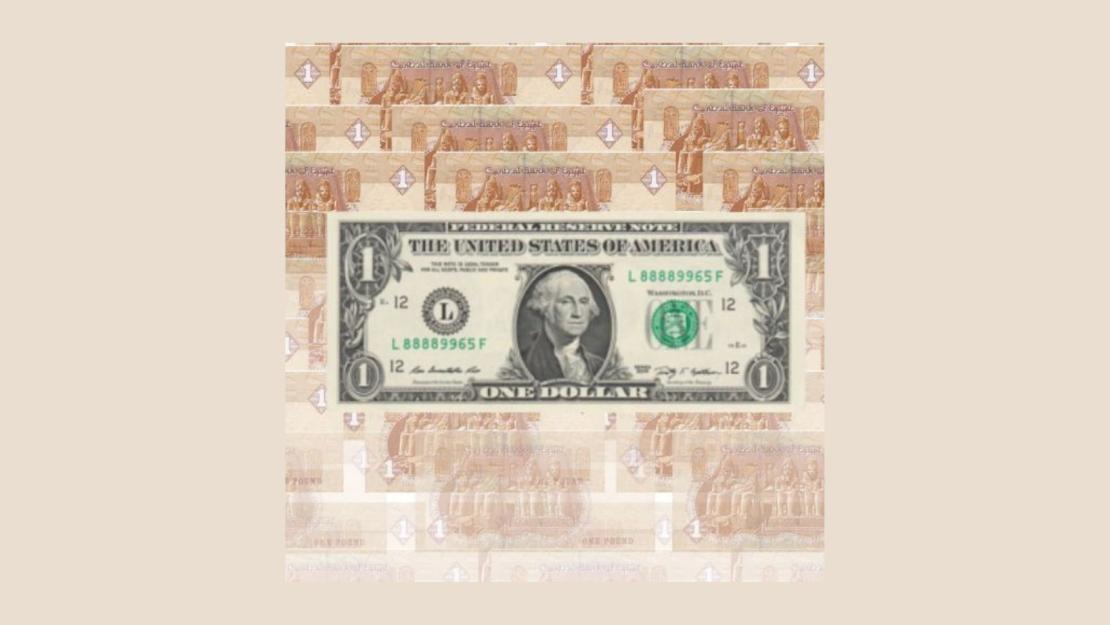
The Egyptian pound weakened against the dollar again last Wednesday in a second dip since the Central Bank of Egypt announced the flotation of Egypt’s currency on October 27, 2022. The pound has devalued by more than 70% since March 2022, a problem that has been intensified by Egypt recording its highest inflation rates in five years.
The Central Bank is moving toward a free-floating pound in order to receive financial assistance from the International Monetary Fund (IMF), but what does this mean for average Egyptians?
How Many Exchange Rates Exist Right Now?
First, it is important to note that not every industry in Egypt uses the official pound-to-dollar exchange rate. The Egyptian government sets an official rate but other industries may use a parallel rate, also known as a black market rate. As of mid-January, the official government rate is about 29 pounds to the dollar, but certain areas in the private sector, such as auto dealers, use a rate of around 35 pounds to the dollar, says Hany Genena, adjunct faculty member in the Department of Management.
This most recent dip in value should not impact those private sectors that already maintain a weaker exchange rate. “The private sector already prices its products and services using an exchange rate of 30 to 35 EGP to one USD, depending on industry. So, on the margin, the recent moves shouldn't add much to an already high inflation rate,” explains Genena.
Meanwhile, Egypt’s dollar shortage is causing some prices to continue to rise. “Producers of food and beverage are facing a decline in their inventories of raw materials and finished products due to dollar shortage. So, the limited supply is triggering an upward increase in the selling price,” Genena says.
In the public sector, government subsidized commodities, like fuel and food items, will change prices as well. “The price of goods and services from the government will change, since they follow the official exchange rate. Hence, inflationary pressures will likely continue to grow and hopefully peak by the second financial quarter of this year, which is April 1 to June 30,” Genena states.
What Does the Future Hold?
How much lower can the pound’s value go? Hopefully, it should be stabilizing soon, Genena says. The government is slowly staging down the value of the pound to match the real market value, otherwise known as free-floating. If the government sticks to schedule, the pound should reach its final, lowest value by the second financial quarter of 2023, Genena forecasts.
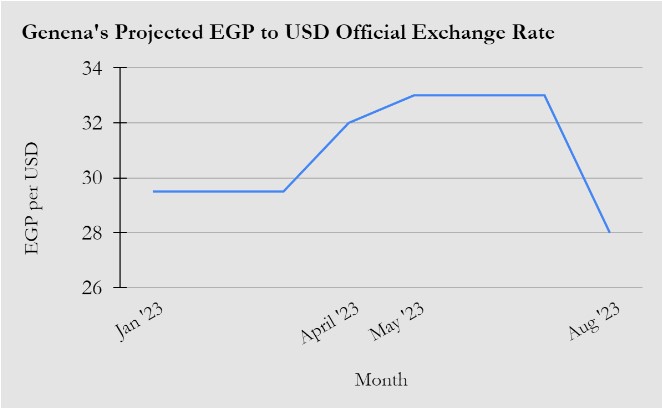 “I believe the EGP may overshoot temporarily to 32 or 33 pounds per dollar before appreciating during the second half of 2023 to around 28 pounds per dollar,” he predicts.
This should open up more channels for imported goods, an area which Egypt has been struggling with since the beginning of the war in Ukraine.
“The first benefit of floating the pound is that Egypt will receive official funding from multilateral partners like the IMF, who required the decision for their collaboration agreement,” states Genena. “The second benefit is that once the government scales down the value of the pound to its real market value, it will simplify the foreign exchange into a single rated currency. This will encourage private imports that should alleviate the import shortage.”
While the government and international organizations are initiating this long-term plan, Genena states that the average Egyptian still has to cope with the short-term fallout. “While inflation may not increase substantially with this last devaluation, it remains high — putting financial strain on families across the country, particularly those in the middle or lower classes who do not own USD, properties or stock,” he says.
What Can Egyptians Do?
Some banks are encouraging Egyptians to save money by offering certificates of deposit. A certificate of deposit allows an individual to deposit money in the bank, under the assumption that they will not withdraw that money for an entire year. In return, the bank will apply an increased interest rate on that money, compared to the interest rate on a normal deposit that could be withdrawn at any time, making it a better long-term investment. This should improve inflation rates in the long term, as it did when certificates of deposits were used during the currency devaluation of 2017.
Genena advises that low-income families should take advantage of support programs from the government, while middle-income families should invest whatever they can from their savings into inflation-proof assets, such as gold coins, stocks, or the certificates of deposit.
Thankfully, there is a light at the end of the tunnel for Egypt, according to Genena. “It is important to remember that a key strength Egypt possesses at this stage is that banks are well-capitalized and capable of absorbing shocks. Egypt should be able to sustain growth - no matter how anemic - despite the magnitude of the financial shock,” he concludes.