AUC Home page
Back to AUC Home

Business Forward 2022 Annual Event: Devaluation, external debt and the private sector

Nouran Rabie
December 12, 2022
BF

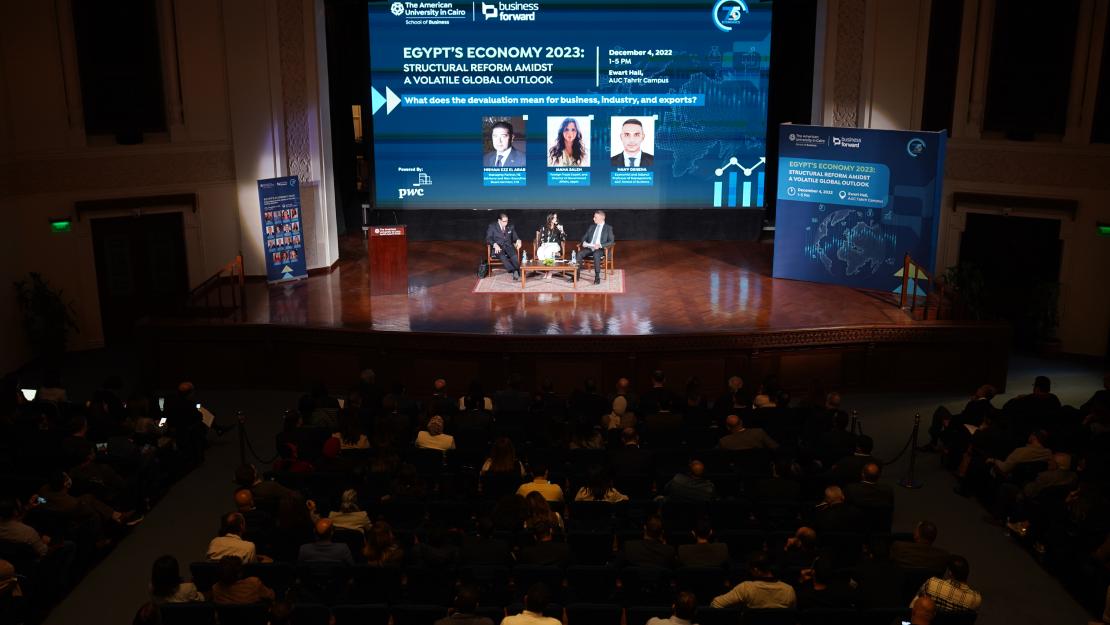
On December 4, Business Forward, the AUC School of Business knowledge portal, hosted its fifth annual event under the title “Egypt’s Economy 2023: Structural Reform Amidst A Volatile Global Outlook” at AUC Tahrir Square’s Ewart Memorial Hall. 

To make sense of all developments and factors that affected Egypt’s economy in 2022, Business Forward and its content partner Dcode Economic and Financial Consulting created the annual Business Forward year-in-review Video in collaboration with the School’s Department of Economics, which is celebrating its Diamond Jubilee this year.


A floating pound: promises and missed opportunities for businesses and exporters

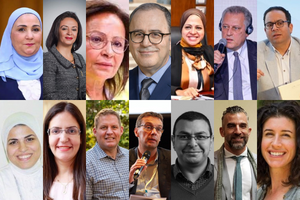
The first session of the event titled “What does the devaluation mean for business, industry, and exports?” featured an enriching discussion between Hisham Ezz Elarab, managing partner, HE Advisory and non-executive board member of the Commercial International Bank (CIB Egypt), Maha Saleh ’02, foreign trade expert and director of government affairs at Apple, and Hany Genena '95, economist and adjunct professor of management, AUC School of Business.


"Over the past 50 years, we have not been practicing what we preach. We did everything other than trying to reach price stability thinking that the exchange rate is part of our dignity,” said Hisham Ezz El Arab, renowned banker, non-executive chairman of the Commercial International Bank (CIB) and managing partner of HE Advisory.


Read more insights on the flotation of the pound here.


Unraveling Egypt's debts: problems and solutions

The second session titled “How should Egypt’s external debt be perceived?” featured Ahmed Galal, economist and former Minister of Finance, Alia El Mahdy, professor of economics, Faculty of Economics and Political Science, Cairo University, Ahmed Kouchouk ‘99, Vice Minister for Fiscal Policies and Institutional Reform, Ministry of Finance, and moderated by Dina Abdel-Fattah ‘07, chair, Department of Economics, AUC School of Business.


“Debt is not a bad thing, it is even necessary especially when you have such low private savings and low incomes," said Ahmed Galal. The problem, he explained, is that the reasons why Egypt had to borrow in the first place do not get addressed at the roots.


Read more insights on Egypt's external debt here.


Essentials for economic reform: what are the prospects of Egypt's private sector?

The last session of the day was titled “What are the expansion prospects for the private sector?” and featured Khaled El Mikati, chairman of the board at Mikati Investment and Trading Co. (MITCO), Yasmine El-Hini, acting country manager for Egypt at the International Finance Corporation (IFC), Sameh Hassan '87, chief executive officer at Savola Foods Co., and Maged EzzElDeen, country senior partner at PwC Egypt.


"There are several ways to attract FDI, such as IPOs; however, it can be tricky since it is subject to global market conditions. Alternative investment schemes are strategic investments and Public-Private Partnerships (PPPs), as well as concession agreements," explained Yasmine El-Hini.


Read more insights on Egypt’s private sector dynamics here.


Launch of #IMovedMyBusinessForward campaign: family business edition running until May 2023

The event also saw the launch of the latest edition of Business Forward’s annual digital campaign. Watch the campaign video to learn more and fill out this form to join the campaign. This year’s campaign focuses on family businesses and runs until May 2023.


“The campaign #IMovedMyBusinessForward will invite family businesses of all sizes to present their family business stories and to share their experiences, to reflect their challenges and perceived opportunities. In parallel, we will be also sharing through this campaign latest knowledge and research about the discipline of family business,” said Randa el Bedawy, associate professor of Management at AUC School of Business.


This year’s annual event and campaign were generously supported by PwC.

Watch the full event recording here or check out more snaps from the event here.

Share

African business schools’ deans launch their climate leadership initiative at AUC School of Business

Nouran Rabie
November 8, 2022
Roundtable

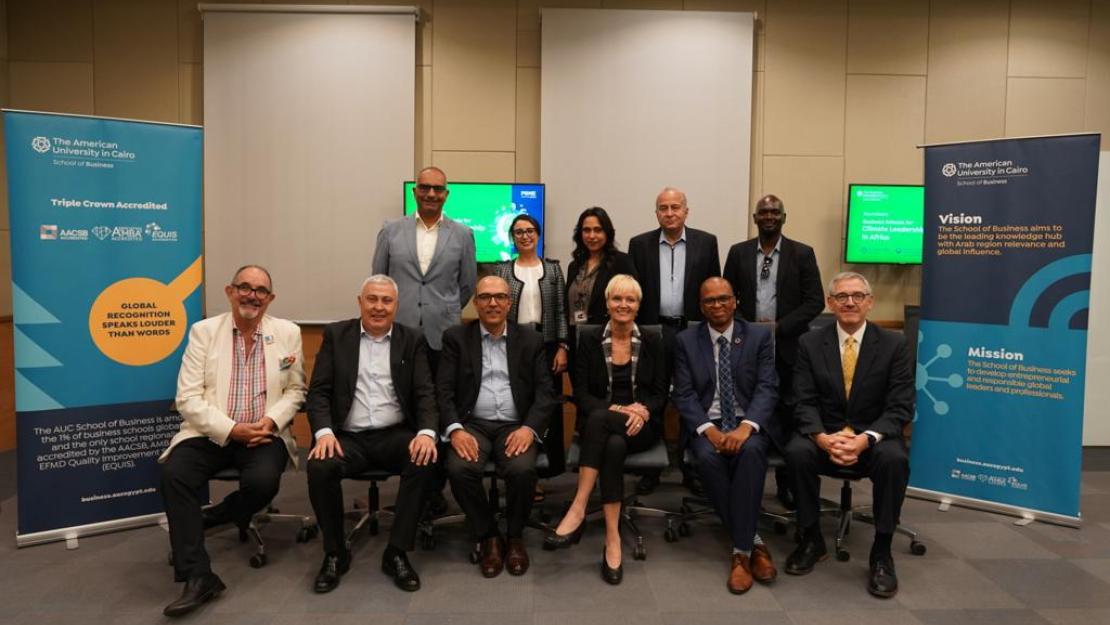
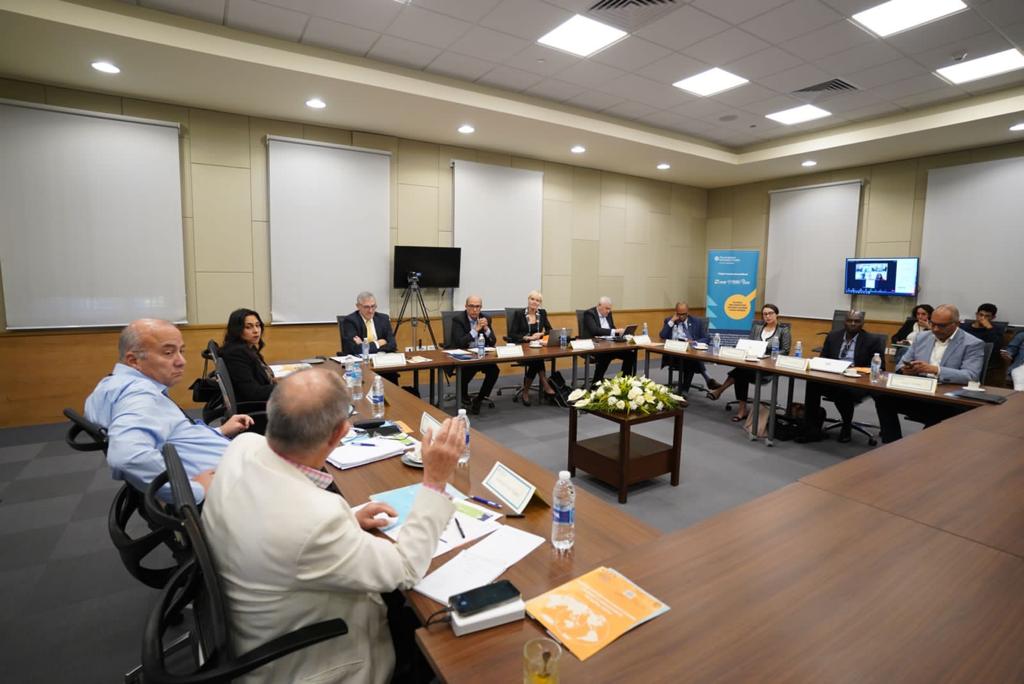
On November 7, AUC School of Business hosted a roundtable for deans of six leading African business schools as well as representatives from the African Chapter of the Principles for Responsible Management Education (PRME) and the European Business Schools for Climate Leadership (BS4CL), who gathered to launch of the Business Schools for Climate Leadership (BS4CL Africa) initiative.

BS4CL Africa brings together business schools to build a collaborative framework for climate action to transform business education curricula to match the needs and adapt to the realities of the African continent. 

The initiative also invites contributions from the private sector and civil society and will mirror the ambitions of the UN Climate Conference (COP27) which took place in parallel in Sharm El-Sheikh, Egypt. BS4CL Africa is based on the model inspired by the BS4CL group, initiated by eight leading business schools in Europe at COP26 last year.

Peter Tufano, dean and professor emeritus, Saïd Business School at the University of Oxford, Baker Foundation professor at Harvard Business School and BS4CL founding member, shared his support of the Africa-centered edition of BS4CL

“I am thrilled to represent BS4CL at the launch of BS4CL Africa aligning with the opening of COP27. Business schools and businesses have much to contribute to battling climate change and its impacts, and BS4CL Africa will bring an authentic and important African perspective to this global and local issue.”

The roundtable was attended virtual and in-person by: Sherif Kamel, dean, AUC School of Business in Egypt, Thami Ghorfi, president, ESCA Ecole de Management in Morocco, Morris Mthombeni, dean, Gordon Institute of Business Science in South Africa, Yinka David-West, deputy dean, Lagos Business School in Nigeria, David Chiawo, dean, School of Tourism and Hospitality at Strathmore University in Kenya, Mark Smith, director, Stellenbosch Business School in South Africa, Jonathan Foster-Pedley, chair, Association of African Business Schools (AABS), Sarah El-Battouty, Global Ambassador for the United Nations Framework Convention on Climate Change (UNFCCC), Mette Morsing, head, Principles for Responsible Management Education (PRME) at UN Global Compact, Peter Tufano, dean and professor emeritus, Saïd Business School at the University of Oxford, Baker Foundation professor at Harvard Business School and BS4CL founding member, Andrew Jack, global education editor, The Financial Times, Sherwat Elwan Ibrahim, chair of PRME Chapter Africa, Mumbi Wachira, vice-chair, PRME Chapter Africa, Samer Atallah, associate professor of economics and associate dean for graduate studies and research, AUC School of Business in Egypt, Fadwa Chaker, director of research, ESCA Ecole de Management in Morocco, and Ali Awni, professor of practice and director at The John D. Gerhart Center for Philanthropy, Civic Engagement and Responsible Business at AUC School of Business in Egypt.
 

1


“BS4CL Africa exemplifies how African businesses are already taking responsibility for their impact on the planet and considering the planet’s impact on their businesses. PRME Chapter Africa continues to produce thought leadership in this area through its programs and network. After its launch one year ago during the AUC Business Forum, its membership has already grown to 20 schools out of the larger PRME network of over 860 higher education institutions. The BS4CL Africa initiative is sure to be one of high impact into the future”, commented Mette Morsing.

“We are excited about the momentum of BS4CL Africa and envision that the Deans Roundtable will be a continued collaboration for impact, one which closely aligns with the ambitions of PRME,” continued Sherwat Elwan Ibrahim.

The discussion focused on climate challenges and policies and the need to address them in business curricula through teaching, case studies and projects to help shape the next generation awareness and engagement in climate action.

Recognizing the critical role that higher education plays in addressing climate change and its associated challenges, Dean Sherif Kamel said

“Our ultimate goal is for business schools to effectively address climate change issues by integrating timely and critical subjects within the business schools’ ecosystem. This encompasses teaching, curriculum, cases, and projects including research endeavors and business development activities, as they help shape the next generation of leaders to impact society.”


The speakers tackled topics, such as the required resources for associated activities to increase awareness on climate leadership, including gathering Deans’ support, institutional commitment, dedicated faculty, and partnership champions. 

“We are a bridge between the public and private sectors, and we need to use this to affect change in policies for the betterment of society,” stated Yinka David-West.

“It is our responsibility to be leaders of change in our societies,” echoed Thami Ghorfi.

The discussion candidly addressed issues and possible hindrances like resource limitations, prioritization conflicts, school competition, industry commitment, and being able to sell value to students as business schools. As a result, the initiative plans to develop a white paper for attainable action by business schools.


Check out more footage from the Deans Roundtable here.
Share

Balancing the Scales

Yasmin El-Beih and Abigail Flynn
November 4, 2022
Stones on top of each other in the water

A “just transition” seeks to create equilibrium between developed and developing countries.

As major flooding wracks Pakistan, droughts choke much of East Africa and wildfires raze Australia, it is becoming clear that the consequences of climate change are not distributed equally across the globe. Industrialized countries in the Global North, particularly those with strong colonial histories, have the worst carbon emission records. Yet it is the Global South, with relatively lower emissions, that is bearing the brunt of the resulting environmental catastrophes. 

Ali Awni, professor of practice in the Department of Management and director of AUC’s John D. Gerhart Center for Philanthropy, Civic Engagement and Responsible Business, explains the need for a “just transition” to address this inequality.

To read the full article, click here.

Share

Balancing the Scales

Yasmin El-Beih and Abigail Flynn
November 4, 2022
Stones on top of each other in the water

A “just transition” seeks to create equilibrium between developed and developing countries.

As major flooding wracks Pakistan, droughts choke much of East Africa and wildfires raze Australia, it is becoming clear that the consequences of climate change are not distributed equally across the globe. Industrialized countries in the Global North, particularly those with strong colonial histories, have the worst carbon emission records. Yet it is the Global South, with relatively lower emissions, that is bearing the brunt of the resulting environmental catastrophes. 

Ali Awni, professor of practice in the Department of Management and director of AUC’s John D. Gerhart Center for Philanthropy, Civic Engagement and Responsible Business, explains the need for a “just transition” to address this inequality.

To read the full article, click here.

Share

AUC School of Business Receives Multiple Recognitions at the AMBA & BGA Excellence Awards 2022

BGA School of Business Award Ceremony
Local to Global
December 15, 2022

On Friday, December 9, the Association of MBAs (AMBA) and the Business Graduates Association (BGA) hosted a Gala Dinner at the Biltmore Mayfair, where the winners of the AMBA & BGA Excellence Awards 2022 were announced. The ceremony was attended by more than 210 business school leaders, as well as category finalists, judges and members of the media.

Click here to read more 

Share

AUC Receives $86 Million USAID Grant, Largest in University History, for Scholarships and Training

December 19, 2022
A student in class

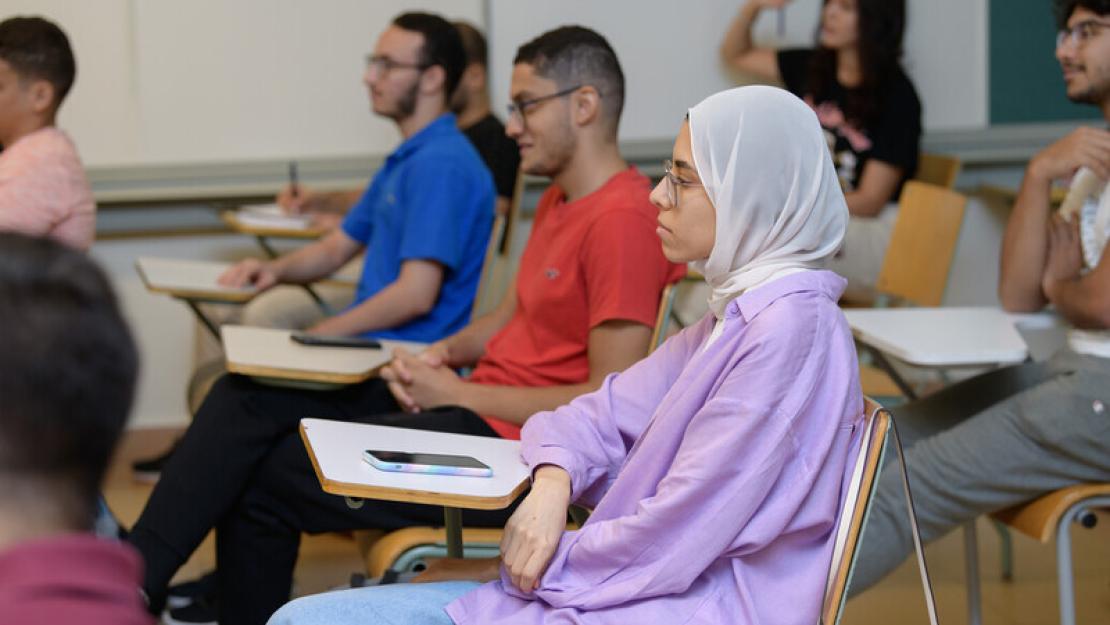
The U.S. Agency for International Development (USAID) has awarded The American University in Cairo (AUC) $86 million for USAID Egyptian Pioneers, a new program that provides scholarships and training to Egyptian students with emphasis on sectors that can advance Egypt’s climate goals. Through a nine-year cooperative agreement, AUC will administer the program in coordination with the Ministry of Higher Education and Scientific Research, the Ministry of International Cooperation, and private and public sector institutions. Prioritizing women’s empowerment, diversity, inclusion and climate resilience, the USAID Egyptian Pioneers will build and develop the capacity of a cross-disciplinary network of public, private and academic entities. The program includes:

  • Scholarships for at least 700 young Egyptians (50% women) from underserved communities to obtain undergraduate degrees in Egypt
  • Scholarships for at least 60 midcareer government professionals to obtain master’s degrees in the United States or Egypt
  • Scholarships for at least 50 midcareer government professionals to pursue postdoctoral studies in the United States
  • U.S. and Egypt-based technical training for at least 280 midcareer Egyptian government professionals and at least 220 mid-career professionals from non-public entities
AUC President Dallal with USAID delegation at COP27
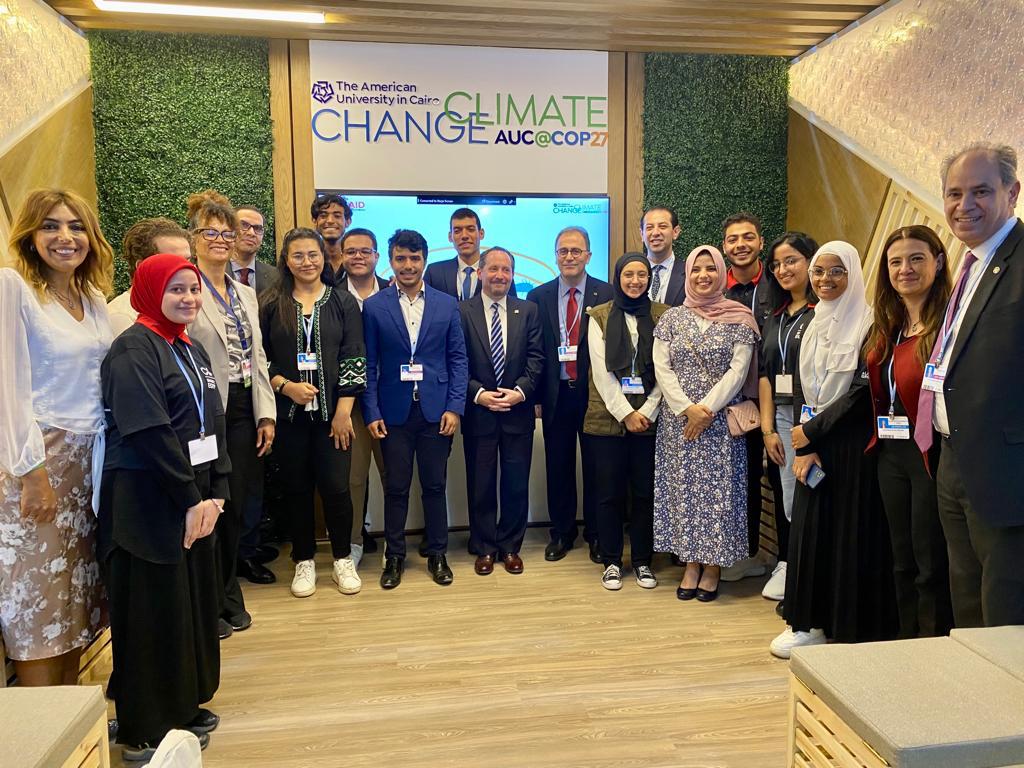
AUC President Ahmad Dallal and USAID delegation celebrate signing at COP27


Accordingly, more than 500 Egyptian women will engage in leadership and professional training, undergraduate and postgraduate scholarships, and study-abroad programs in the United States.

AUC President Ahmad Dallal said, “Leading the USAID Egyptian Pioneers program is a great honor for AUC. We commit to extending our longstanding leadership and excellence in education, capacity development and training to ensure the sustainable integration of the public, private and academic sectors. Egyptian Pioneers will surely leave an enduring impact on Egyptian society, advancing Egypt’s economic development and progress toward its Vision 2030. We thank the U.S. government and the Ministry of Higher Education and Scientific Research as we endeavor together on this partnership journey,” 

USAID Deputy Mission Director Margaret Sancho stated, “Climate change is an enormous challenge for all people, all over the world. But we also know that women and girls bear a disproportionate burden of its impact. Despite this, women and girls are leading climate change solutions in their communities. That is why USAID’s Egyptian Pioneers program will include leadership and professional training, undergraduate and postgraduate scholarships, and study-abroad programs in the United States for more than 500 Egyptian women."

Share